






Glass vs Plastic Food Storage Containers: Which Is Better for Everyday Food Storage?
Release time: 2026-10-14
- Glass vs Plastic Food Storage Containers at a Glance
- Why Choose Glass Food Storage Containers?
- Why Choose Plastic Food Storage Containers?
- Where Vacuum Food Storage Containers Fit In
- Vacuum Plastic Food Storage Containers
- Vacuum Glass Food Storage Containers
- Vacuum Storage Is Not a Substitute for Refrigeration
- Five Things to Check Before Buying
- Which Option Fits Your Daily Routine?
- Frequently Asked Questions
Glass is a practical choice for meals stored and reheated at home, while plastic is often more convenient for packed lunches, snacks, and everyday transport. Neither material is the best option for every kitchen task.
Choosing the right food storage containers means looking beyond the material. Container size, lid design, temperature limits, cleaning requirements, and portability all affect how useful a storage system will be.
This guide compares glass and plastic containers, explains where vacuum storage fits into daily routines, and helps you choose the right option for your household.
Glass vs Plastic Food Storage Containers at a Glance
| Buying Consideration | Glass Containers | Plastic Containers |
|---|---|---|
| Weight | Heavier, particularly when filled | Generally lighter and easier to carry |
| Everyday handling | Requires care to avoid chips and breakage | Often more convenient for transport and frequent handling |
| Stains and odors | Typically resists lingering stains and odors | Some plastics can retain stains or smells |
| Reheating | Suitable only when approved for microwave use | Suitable only when labeled microwave-safe |
| Freezer storage | Requires freezer-safe construction | Requires freezer-safe material |
| Kitchen organization | Works well for visible, portioned meal storage | Many designs stack or nest to save space |
| Vacuum storage | Needs a compatible vacuum lid and valve | Needs a container specifically designed for vacuum use |
| Best everyday role | Home meal storage and approved reheating | Lunches, portable snacks, and lightweight storage |
The container body and lid may have different care instructions. Always check both before microwaving, freezing, or washing in a dishwasher.
Why Choose Glass Food Storage Containers?
Glass containers work well for households that prepare meals in advance, refrigerate leftovers, and prefer to see what is inside without opening every lid.
They are particularly convenient when food stays mainly at home rather than traveling in a lunch bag.
Convenient for Meal Preparation
A matching set of glass containers can make it easier to divide cooked meals into portions and organize the refrigerator.
Smaller containers suit individual lunches or side dishes, while larger sizes can hold family portions. Clear sides help you identify stored food and remember what should be used first.
Practical for Sauces and Strongly Flavored Foods
Glass generally resists persistent stains and odors, making it a useful option for tomato-based dishes, curries, and other strongly flavored meals.
However, the lid and sealing gasket may still retain food residue or odors. Cleaning the complete container—not only the glass body—is important.
Suitable for Reheating When Approved
Some glass containers allow you to store and reheat food in the same dish. This can reduce the need to transfer meals into separate bowls or plates.
Check the product instructions first. Not every glass container is microwave-safe, oven-safe, or suitable for rapid temperature changes. Lids usually require separate handling.
The Main Trade-Off: Weight and Breakage
Glass is heavier than plastic and can chip or break if dropped. For someone carrying several meals each day, this additional weight may be inconvenient.
Avoid using containers with damaged rims, chips, or cracks, and follow the manufacturer’s guidance on moving between cold storage and heating.
Why Choose Plastic Food Storage Containers?
Plastic containers are often the more practical option when portability matters. Their lower weight makes them easier to carry to work, school, picnics, and other activities.
They can also simplify storage when empty containers are designed to nest inside one another.
Lightweight for Everyday Transport
Reusable plastic containers are convenient for sandwiches, portioned fruit, snacks, and refrigerated ingredients.
For busy households, a coordinated set with compatible lids can make daily packing easier. Rectangular designs may also fit neatly into lunch bags and refrigerator shelves.
Convenient for Kitchen Organization
Plastic containers come in a wide range of sizes, making them useful for separating ingredients and organizing frequently used foods.
When choosing a set, consider whether the shapes work together. A practical collection of commonly used sizes is often more useful than a large set containing containers you rarely need.
Check Food-Contact and Temperature Instructions
Choose containers intended for repeated food-contact use, with clear instructions for storage, cleaning, and heating.
A container suitable for refrigeration is not automatically suitable for microwaving. Likewise, a “BPA-free” label does not establish microwave, freezer, or dishwasher suitability.
Use each product only within its stated limits.
Watch for Wear
Replace plastic containers that become cracked, warped, badly scratched, or difficult to clean.
Also check the lid. If it no longer closes correctly, the container may not provide dependable storage even when the body looks undamaged.
Where Vacuum Food Storage Containers Fit In
Vacuum storage adds another feature to the glass-versus-plastic comparison: the ability to remove some of the air inside a closed container.
A conventional airtight container limits air exchange after closing. A vacuum container uses a compatible pump or air-removal mechanism to reduce the air already inside.
The performance depends on the complete system, including the container body, lid, gasket, valve, and pump.
Vacuum Plastic Food Storage Containers
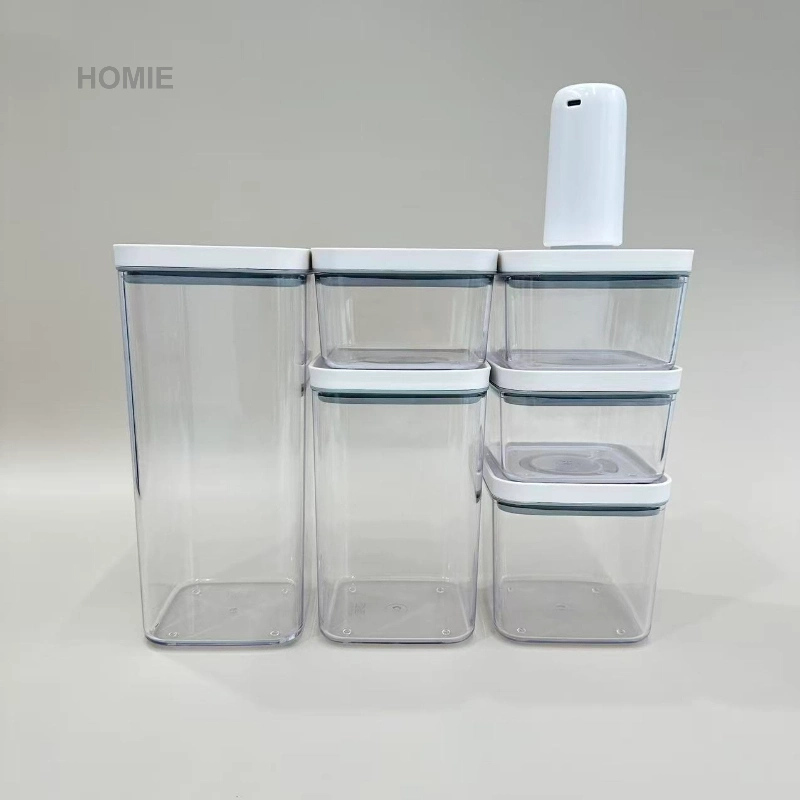
For buyers who want an air-removal feature without the weight of glass, vacuum plastic food storage containers can be a practical option.
Before choosing a system, check:
- Whether the container is specifically designed for vacuum use;
- How the pump connects to the lid;
- Whether the gasket and valve are easy to clean;
- Whether replacement lids or seals are available;
- Which temperatures and cleaning methods are permitted.
An ordinary plastic container should not be used with a vacuum pump unless the manufacturer explicitly permits it.
Vacuum Glass Food Storage Containers
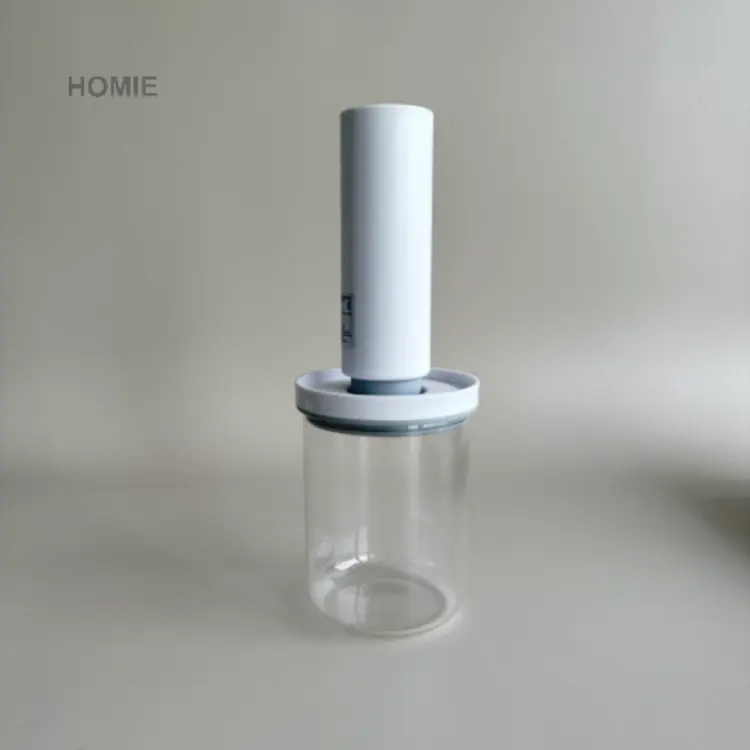
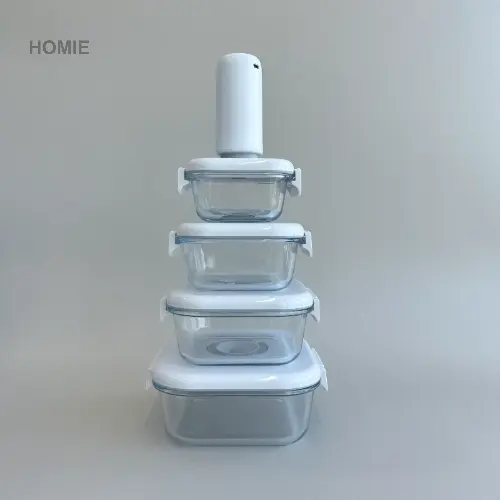
For home-based meal storage, a vacuum glass food storage container combines a glass body with a compatible vacuum lid.
The glass body may be straightforward to clean, but the vacuum components still need attention. Check how to release the vacuum, clean the valve, and handle the lid before reheating.
A well-designed system should be easy to use consistently, not simply attractive on the kitchen shelf.
Vacuum Storage Is Not a Substitute for Refrigeration
Vacuum storage may help maintain the quality of some foods, but it does not make perishable food shelf-stable.
Food that requires refrigeration or freezing still needs appropriate temperature control after vacuum sealing. Do not assume that removing air makes leftovers safe at room temperature or gives them an unlimited storage life.
Five Things to Check Before Buying
The most useful question is not simply “Which material is better?” It is “Which container fits the way I use food every day?”
1. Choose Sizes That Match Your Portions
Think about your typical meals and ingredients.
Oversized containers take up unnecessary space, while undersized ones encourage overfilling. For vacuum containers, follow any fill line or clearance requirement around the valve.
2. Check the Lid and Seal
A dependable lid should close consistently, and its sealing components should be easy to inspect and clean.
If you carry soups, dressings, or other liquids, look for explicit leakproof guidance. A container described as airtight or vacuum-compatible is not automatically suitable for transporting liquids.
3. Verify Heating and Freezing Limits
Check microwave, freezer, oven, and dishwasher suitability separately.
Follow instructions on lid removal, venting, temperature changes, and maximum operating temperatures. Do not assume that approval for one use means approval for every use.
4. Consider Cleaning Effort
The best storage system is one you can clean thoroughly and use regularly.
Some lids contain removable gaskets or vacuum valves, while others have parts that should not be dismantled. Follow the cleaning instructions rather than forcing components apart.
5. Look for Replacement Parts
A container set can remain useful for longer when replacement lids, gaskets, valves, or pumps are available.
This is particularly important for vacuum systems, where a small worn component may affect the performance of the whole container.
Which Option Fits Your Daily Routine?
| Your Main Need | Practical Starting Point |
|---|---|
| Store and reheat meals at home | Microwave-approved glass containers |
| Carry lunches and snacks | Lightweight reusable plastic containers |
| Organize dry ingredients | Either material with an appropriate lid and seal |
| Use vacuum storage mainly at home | Compare glass systems with easy-to-clean vacuum lids |
| Keep a vacuum storage set lightweight | Compare plastic containers designed for vacuum use |
| Store food in the freezer | Either material, provided it is freezer-safe |
| Transport liquids | Prioritize verified leakproof performance |
For many households, a combination works best. Glass can handle meals stored and reheated at home, while plastic can make lunches, snacks, and transport easier.
Vacuum storage can be added where its air-removal feature is useful, provided the system fits your cleaning routine and food-storage requirements.
Frequently Asked Questions
Are plastic food storage containers suitable for everyday use?
Reusable plastic containers intended for food contact can be used according to their instructions. Check the permitted temperatures and uses rather than assuming every container is suitable for freezing, reheating, or dishwasher cleaning.
Can glass and plastic containers both be used in the microwave?
Only when the specific product is approved for microwave use. Check the lid separately and remove or vent it as instructed. Material alone does not establish microwave suitability.
Do vacuum containers keep food safe without refrigeration?
No. Vacuum sealing does not replace refrigeration or freezing. Perishable food still needs the same appropriate temperature control after the air is removed.
Are vacuum food storage containers automatically leakproof?
No. Vacuum sealing and leakproof performance are different functions. Before carrying liquids, confirm that the manufacturer permits it and follow the instructions for filling, closing, and transport.