






Electric Vacuum Pumps vs Vacuum Sealers: Which Food Storage Solution Do You Need?
Release time: 2026-10-14
Table of Contents
An electric vacuum pump is often the more convenient choice for reusable containers that you open regularly. A countertop vacuum sealer is usually more practical for portioning food into sealed bags, especially when preparing several meals or organizing freezer supplies.
Both systems remove air from compatible packaging, but they fit different kitchen routines. The right choice depends on what you store, how frequently you access it, and whether you prefer reusable containers or flexible bags.
This guide explains the differences, the limitations to check, and how to choose a vacuum storage system for everyday use.
What Is the Difference Between an Electric Vacuum Pump and a Vacuum Sealer?
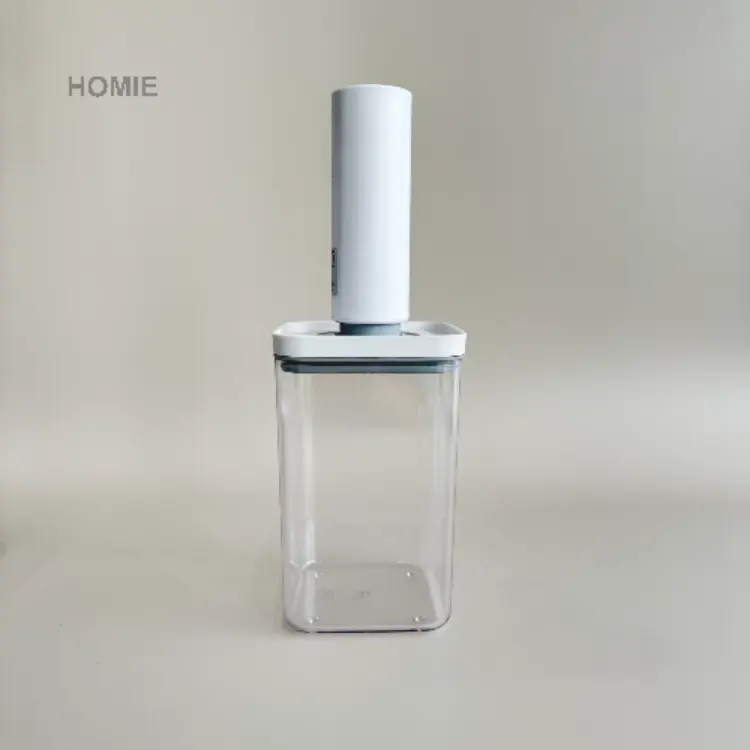
The terminology can be confusing because a vacuum sealer also contains a pump. In this comparison, “electric vacuum pump” means a compact device that removes air through a valve in a compatible container or reusable bag. “Vacuum sealer” means a countertop appliance that typically removes air from a bag and then heat-seals its opening.
| Feature | Electric Vacuum Pump | Countertop Vacuum Sealer |
|---|---|---|
| Main function | Removes air through a compatible valve | Removes air and heat-seals a bag |
| Typical packaging | Vacuum containers and compatible valve bags | Approved vacuum bags or rolls |
| Closing method | Container lid or bag closure with a valve | Heat-sealed bag edge |
| Repeated access | Convenient for opening and resealing containers | Usually requires cutting open and resealing the bag |
| Kitchen footprint | Generally compact | Usually requires more worktop or cupboard space |
| Everyday use | Refrigerated ingredients and frequently accessed food | Portioning and batch packaging |
| Ongoing purchases | Replacement seals, lids, or compatible bags when needed | Compatible bags or rolls |
| Key compatibility check | Pump connection, valve, lid, and container | Bag material, texture, width, and sealing requirements |
Some countertop sealers also support containers through an accessory hose, while some handheld pumps work with both containers and valve bags. Check the specific system rather than relying on the product name alone.
When an Electric Vacuum Pump Makes More Sense
You Open Your Food Containers Regularly
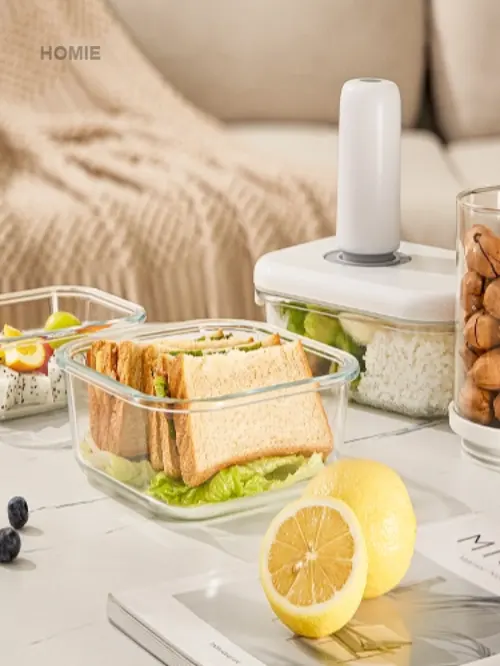
For ingredients and prepared food that you access throughout the week, reusable vacuum containers can make storage straightforward.
After taking out a portion, close the lid and use the pump again according to the instructions. You do not need to cut open a heat-sealed bag each time you want to access the contents.
Compact electric vacuum pumps can therefore suit households that prioritize convenient refrigerator organization over packaging large quantities at once.
You Prefer a Reusable Container System
Rigid containers provide a consistent shape for organizing refrigerator shelves. Depending on their design, they may also keep food separated and protect delicate contents from direct compression.
When choosing a system, compare the containers as carefully as the pump. Useful details include:
- Sizes that match your usual portions;
- Lids that close reliably;
- Accessible valves and sealing gaskets;
- Clear cleaning instructions;
- Availability of replacement parts.
An electric vacuum pump for food containers should be selected together with compatible lids and valves. A pump should not be assumed to work with every vacuum container—or with an ordinary airtight box.
You Have Limited Kitchen Space
A compact pump can be convenient in a small kitchen where worktop space is limited. However, remember that the complete system includes the containers, not just the device.
Before buying, consider how the containers will stack, where the pump will be stored, and whether charging or battery replacement fits your routine.
When a Vacuum Sealer Is the Better Fit
You Prepare Food in Batches
A countertop vacuum sealer can be useful when dividing a larger purchase into individual portions.
For example, you can package portions separately, label them, and store them according to the food’s refrigeration or freezing requirements. This approach makes it easier to take out only the amount needed for a particular meal.
Compare maximum bag width, sealing controls, and recommended operating intervals if you expect to package several portions in one session.
You Prefer Flexible Packaging
Bags can fit around food more closely than rigid containers, making them useful when storage space is a priority.
Their flexibility can help organize portions, but it also means they offer less structural protection. Fragile foods may be compressed unless the machine provides an appropriate control or technique.
The bag itself matters: use packaging approved for the appliance rather than ordinary household storage bags.
You Need Bags for a Specific Cooking Method
If you intend to cook food in the bag, confirm that the packaging is approved for that cooking method and temperature.
Being suitable for vacuum sealing does not automatically make a bag suitable for sous vide, boiling, or microwave heating. Follow the packaging and appliance instructions together.
What About Liquids and Delicate Foods?
The type of food can change which system is easiest to use.
Liquids Require Careful Handling
With a container-based system, keep food and liquid away from the vacuum valve and follow any maximum fill line. Liquid entering a pump can interfere with operation or damage the device.
With an external bag sealer, liquid can move toward the suction channel or sealing area. Check whether the machine supports moist foods and follow its recommended preparation method.
Chamber vacuum sealers are a separate category and can offer different liquid-handling capabilities. They should not be treated as equivalent to a standard external countertop sealer.
Delicate Foods Need Suitable Packaging and Controls
Rigid containers can help prevent direct bag compression around fragile contents. Bag systems may require a gentle setting, pulse control, or another manufacturer-approved approach.
Do not assume that stronger suction is always better. The useful result is a dependable seal without damaging the food or drawing it into the vacuum mechanism.
How to Choose the Right Food Vacuum Pumps or Sealing System
1. Start With Your Storage Routine
Ask yourself what you will actually do most often:
- Open and close containers throughout the week;
- Pack lunches and prepared ingredients;
- Divide bulk purchases into portions;
- Prepare several freezer packages in one session;
- Store food in bags approved for a particular cooking method.
Choose around your most frequent task, not a feature you may rarely use.
2. Verify Compatibility Before Buying
For food vacuum pumps, check the exact containers, lids, valves, bags, and adapters supported by the manufacturer.
For countertop sealers, check the required bag type and width. Compatible-looking packaging may not perform correctly if it does not meet the system’s requirements.
3. Check Cleaning and Maintenance
A practical storage system should be easy to keep clean.
Look for instructions covering:
- Container lids and gaskets;
- Vacuum valves;
- Pump contact surfaces;
- Sealer channels and drip trays;
- Components that must not be immersed in water.
Cleaning requirements can influence daily convenience as much as the air-removal process itself.
4. Compare the Complete Cost
The device price is only part of the purchase.
For a pump-based system, consider container sizes, additional lids, replacement gaskets, and charging requirements. For a bag-sealing system, consider bags or rolls and the amount of packaging used in your routine.
Neither option is automatically cheaper. The better value depends on how often you use it and how well the packaging fits your needs.
5. Separate Storage Features From Heating Features
A vacuum container or bag may be suitable for cold storage but not for heating.
Check microwave, freezer, dishwasher, and cooking suitability separately. Release the vacuum before opening a container and follow any instructions on removing the lid before reheating.
Vacuum Storage Does Not Replace Safe Food Handling
Vacuum packaging reduces air inside compatible packaging; it does not sterilize food.
Perishable food still requires appropriate refrigeration or freezing. Removing air does not make leftovers, meat, or other refrigerated foods safe to store at room temperature.
Avoid relying on a universal claim such as “food lasts five times longer.” Storage life depends on the food, its starting condition, handling, temperature, and packaging. Follow food-specific storage guidance rather than extending storage periods simply because a vacuum has been applied.ask.fsis.usda+2
Which Solution Fits Your Kitchen?
| Your Main Priority | Practical Starting Point |
|---|---|
| Frequently opening and resealing refrigerated food | Electric pump with compatible reusable containers |
| Keeping the device compact | Handheld electric vacuum pump |
| Portioning bulk purchases into bags | Countertop vacuum sealer |
| Preparing multiple packages in one session | Sealer designed for the required workload |
| Protecting delicate food from bag compression | Compatible rigid containers or suitable gentle controls |
| Cooking food in sealed bags | A system and bags explicitly approved for that method |
| Storing liquids | A system with clear, suitable liquid-handling instructions |
For everyday refrigerator access, a container-and-pump system is often convenient. For batch packaging and individually sealed portions, a countertop sealer may fit better.
Some households benefit from both: reusable containers for food accessed regularly and sealed bags for separately portioned supplies.
Frequently Asked Questions
Can an electric vacuum pump work with any food container?
No. The pump must be compatible with the container’s lid and valve. Ordinary airtight containers are not automatically designed for vacuum use. Check the manufacturer’s compatibility information before purchasing.
Can a countertop vacuum sealer also seal containers?
Some models support compatible containers through an accessory hose or adapter. Others are designed primarily for bags. Confirm the supported accessories rather than assuming this function is included.
Can I use ordinary storage bags with a vacuum sealer?
Generally, use only bags or rolls approved for the machine. Standard household bags may not allow proper air removal or form a dependable heat seal.
Does vacuum sealing remove the need for refrigeration?
No. Food that requires refrigeration or freezing still requires it after vacuum packaging. Vacuum storage does not make perishable food shelf-stable.extension.
A Practical Approach to Everyday Food Storage
When comparing options from Homie Storage, start with your daily storage habits and check the compatibility, capacity, and care instructions of the specific product. A system that is easy to use, clean, and maintain is more useful than choosing by suction claims alone.